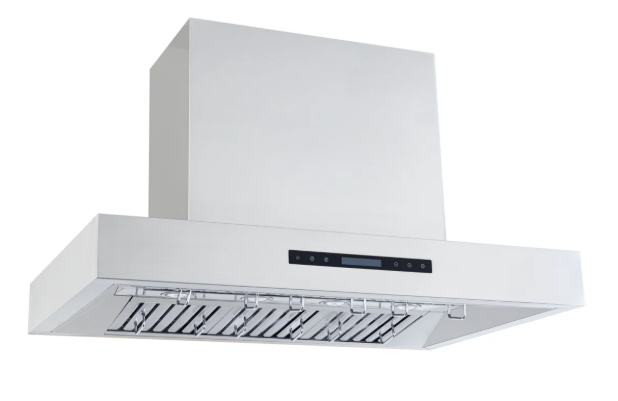
Understanding CFM and Suction Power on a 36 Range Hood Island
Modern kitchens often center around island cooktops that demand strong ventilation. A 36-inch range hood island must manage smoke, grease, and heat rising from all directions without support from surrounding cabinetry. Because island installations are exposed, airflow performance becomes even more important than with wall-mounted units. Understanding how suction power works helps homeowners select a system that maintains clean air, protects finishes, and supports comfortable cooking conditions in open concept layouts. Proper ventilation also contributes to healthier indoor air quality by reducing lingering airborne particles.
What CFM Means in Kitchen Ventilation
CFM stands for cubic feet per minute and measures how much air a ventilation system can move. In a 36-inch range hood island, higher CFM ratings indicate stronger air-extraction capacity. This measurement determines how quickly cooking fumes are removed from the kitchen environment. Proper airflow prevents grease particles from settling on countertops and ceilings. Balanced CFM selection ensures effective performance without excessive noise or unnecessary energy consumption. Accurate airflow calculations support consistent air exchange and prevent stagnation.
Matching CFM to Cooking Style
Cooking intensity influences ventilation requirements. An island range hood placed above a high BTU gas range requires more suction power than one used primarily for light simmering. Professional-grade cooktops generate significant heat and smoke, which demand stronger extraction. Selecting the correct CFM rating based on burner output and cooking frequency supports consistent air quality and prevents odor buildup in adjacent living spaces. Matching airflow to cooking habits ensures efficient removal without overworking the motor.
Airflow Capture Area and Island Placement
Island configurations require broader capture coverage because airflow is not confined by walls. A properly designed 36 range hood island extends slightly beyond the cooktop width to improve smoke containment. Strong suction, combined with an effective canopy design, ensures that rising fumes are directed into the filtration system rather than dispersing into open areas. Adequate mounting height further enhances performance by optimizing the balance between accessibility and airflow strength. Strategic positioning significantly improves overall extraction results.
Duct Size and Ventilation Efficiency
Suction performance depends not only on motor strength but also on duct configuration. When installing a 36-inch range hood island, an appropriate duct diameter ensures smooth airflow and prevents resistance. Narrow or excessively long ducts reduce effective CFM output. Straight runs with minimal bends maintain consistent airflow, allowing the motor to operate efficiently without strain or vibration. Proper sealing of joints also prevents air leaks that could reduce overall efficiency.
Noise Levels and Motor Technology
High CFM does not automatically mean excessive noise. Modern engineering allows an island range hood to deliver powerful suction while maintaining comfortable sound levels. Advanced motor systems and insulated housings reduce vibration. Variable speed controls enable users to adjust airflow based on cooking intensity, ensuring quiet operation during light tasks and maximum extraction during heavy frying or grilling. Improved blade design also contributes to smoother airflow and reduced acoustic impact.
Filtration and Grease Management
Effective suction works alongside reliable filtration. An island range hood typically includes stainless steel baffle filters designed to capture grease efficiently. These filters protect internal components and maintain steady airflow. Easy removal and dishwasher-safe construction simplify maintenance, preserving long term performance and consistent CFM output over time. Routine cleaning prevents buildup that could restrict airflow and compromise suction strength.
Energy Use and Long-Term Performance
Energy efficiency plays an important role in selecting ventilation equipment. A 36-inch range hood island with optimized motor design uses power strategically without sacrificing suction capability. Timely cleaning and routine inspection maintain airflow strength and extend operational lifespan. Balanced engineering ensures the system continues delivering dependable extraction without unnecessary energy waste. Consistent maintenance protects both mechanical components and overall kitchen air quality.
Conclusion
A proper understanding of CFM and suction power ensures that a ventilation system meets real cooking demands. Balanced airflow, thoughtful installation, and quality components create dependable performance in open kitchens. At Proline Range Hoods, we design island models that combine strong extraction with quiet efficiency. Our commitment to engineering excellence supports homeowners seeking reliable ventilation solutions tailored to modern kitchen layouts and long-term performance expectations.